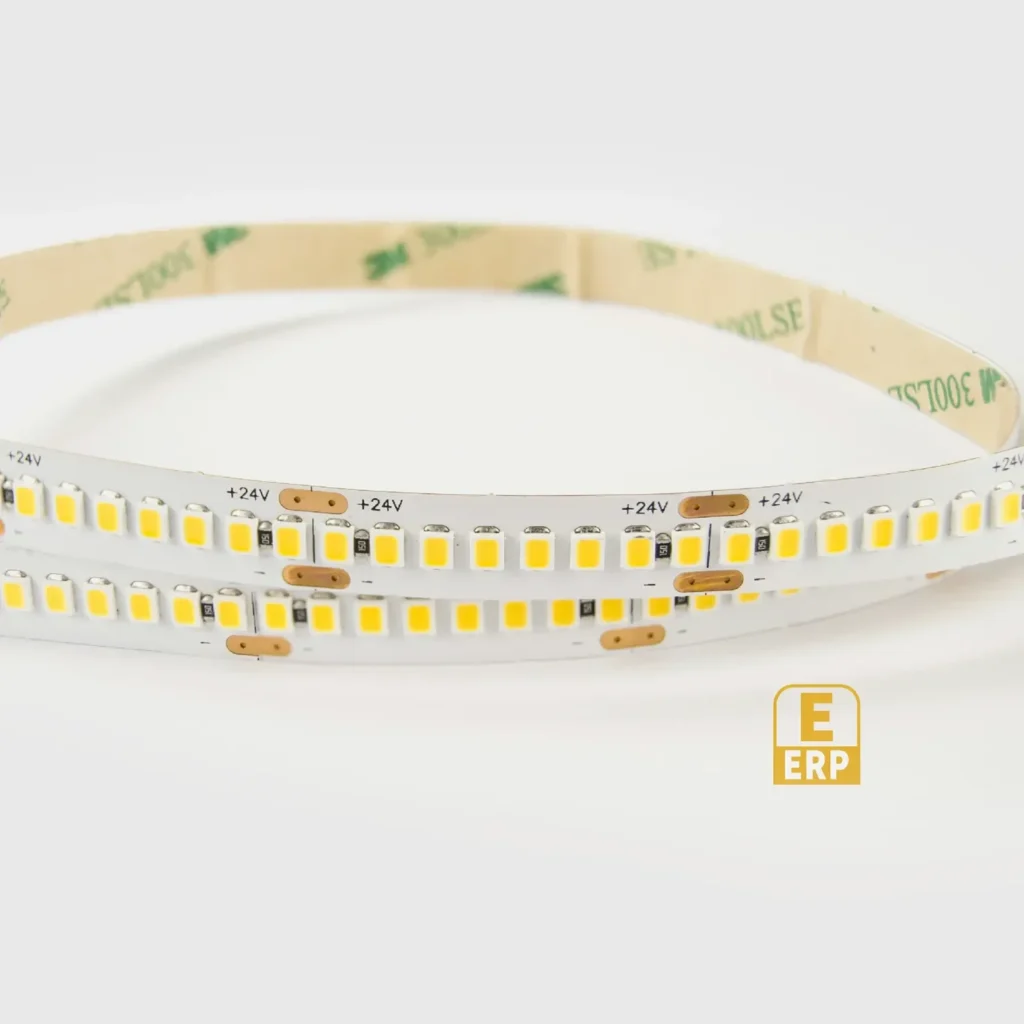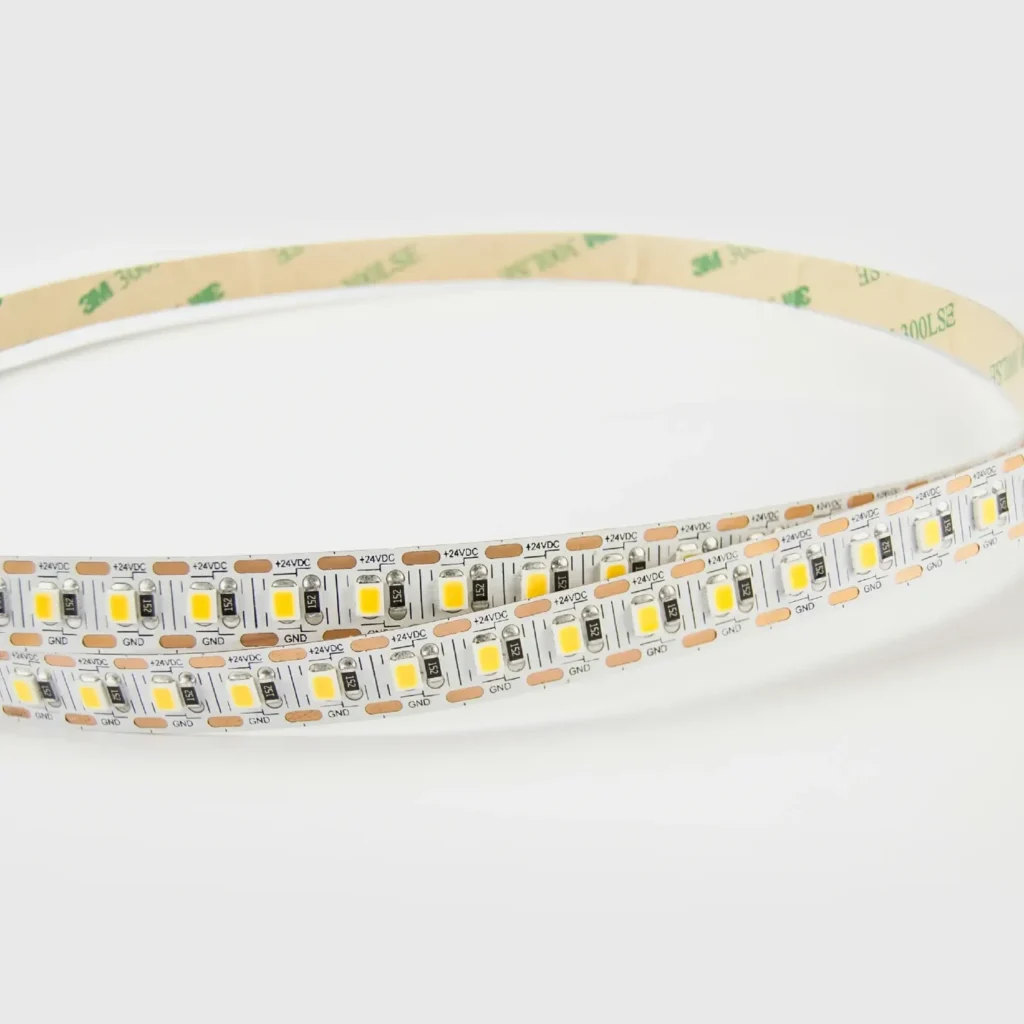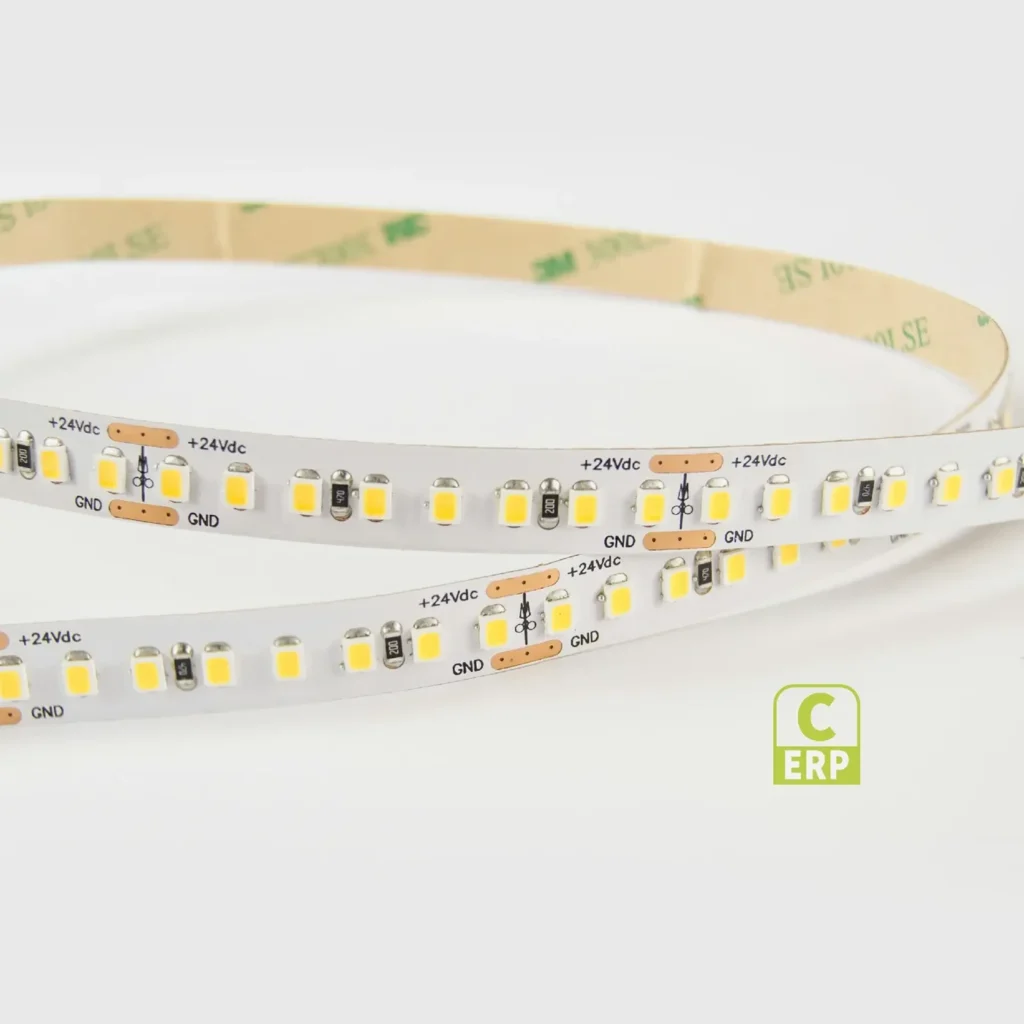
The difference from the user’s point of view
| Action | Tunable white | Dim-to-warm |
|---|---|---|
| Dim while retaining the selected white | Possible only if the offered control arrangement supports it | Colour normally changes with the dimming curve |
| Select warm or cool white at a chosen level | A defining adjustable-white use case | Not an independent setting implied by the label |
| Choose an evening scene | Set both white and output as supported | Select a lower level on the linked curve |
| Replace a control component | Recheck channels, protocol and commissioning | Recheck the supported dimming method and curve |
For a hotel headboard, write the required action in plain language: “A guest can lower output without changing white appearance” is different from “The background becomes warmer when dimmed”. The strip and control chain must deliver the selected behaviour.
Channels and interfaces
An adjustable-white strip may use separately controlled warm and cool channels. Do not infer terminal layout, common polarity, maximum channel current or the allowed combined load from that general description. Obtain the equipment’s own wiring information.
DALI colour control includes a Tc colour type for tunable white. DALI DT8 is not a generic promise that every DT8 component provides every colour type. Verify both the control gear and controller support the intended feature.
What to demonstrate
Check high, intermediate and low output; warm, intermediate and cool settings where applicable; power-return behaviour; and the required scene recall. Test the actual channel loads, not an unrelated bench demonstration.
For fixed-white cabinet lighting that only needs on/off or ordinary dimming, additional colour channels may provide no useful function. Use adjustable white to meet a stated operating need rather than adding it because the product name sounds more capable.