KEY TAKEAWAYS
Key points from this article
- Compare the assembled light line, not the family label alone.
- Use the same CCT, measured output and test conditions.
- Approve fit, controls and appearance on a representative sample.
Start with the visible result
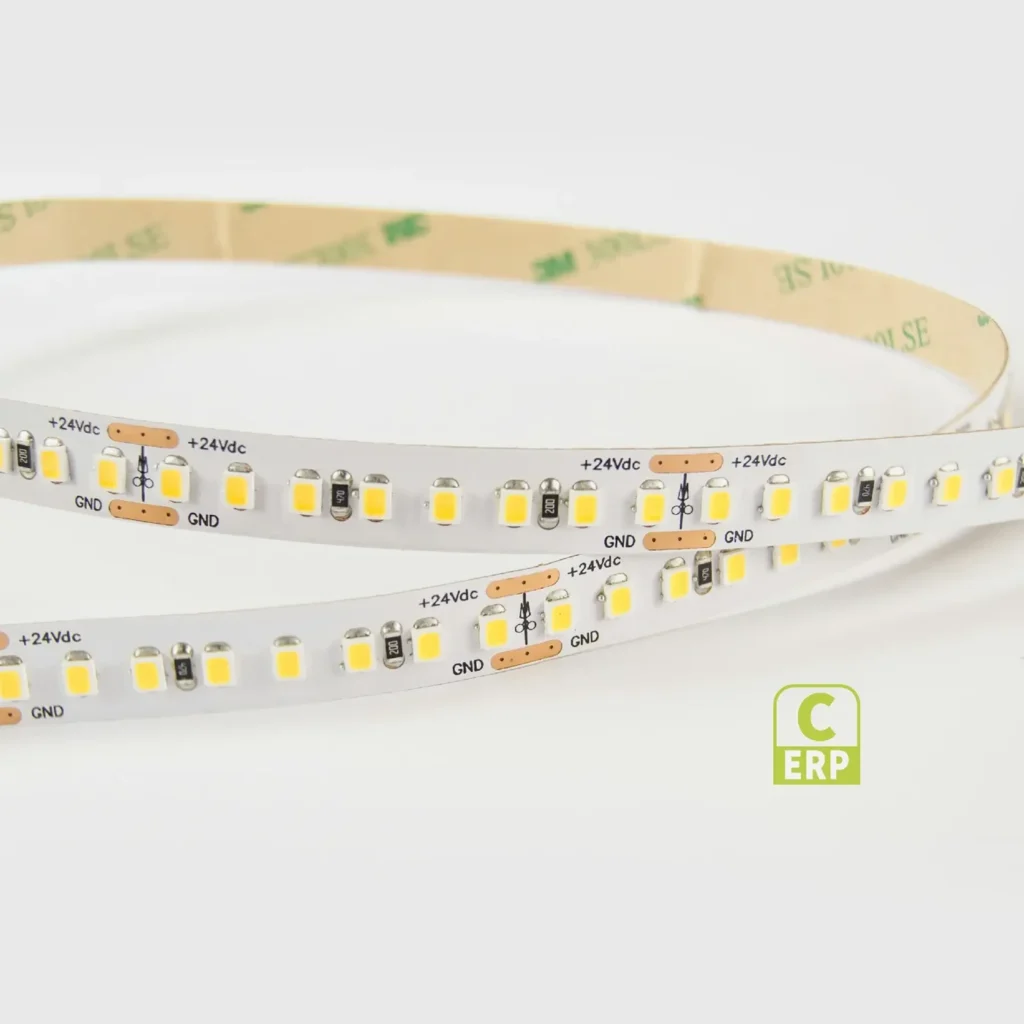
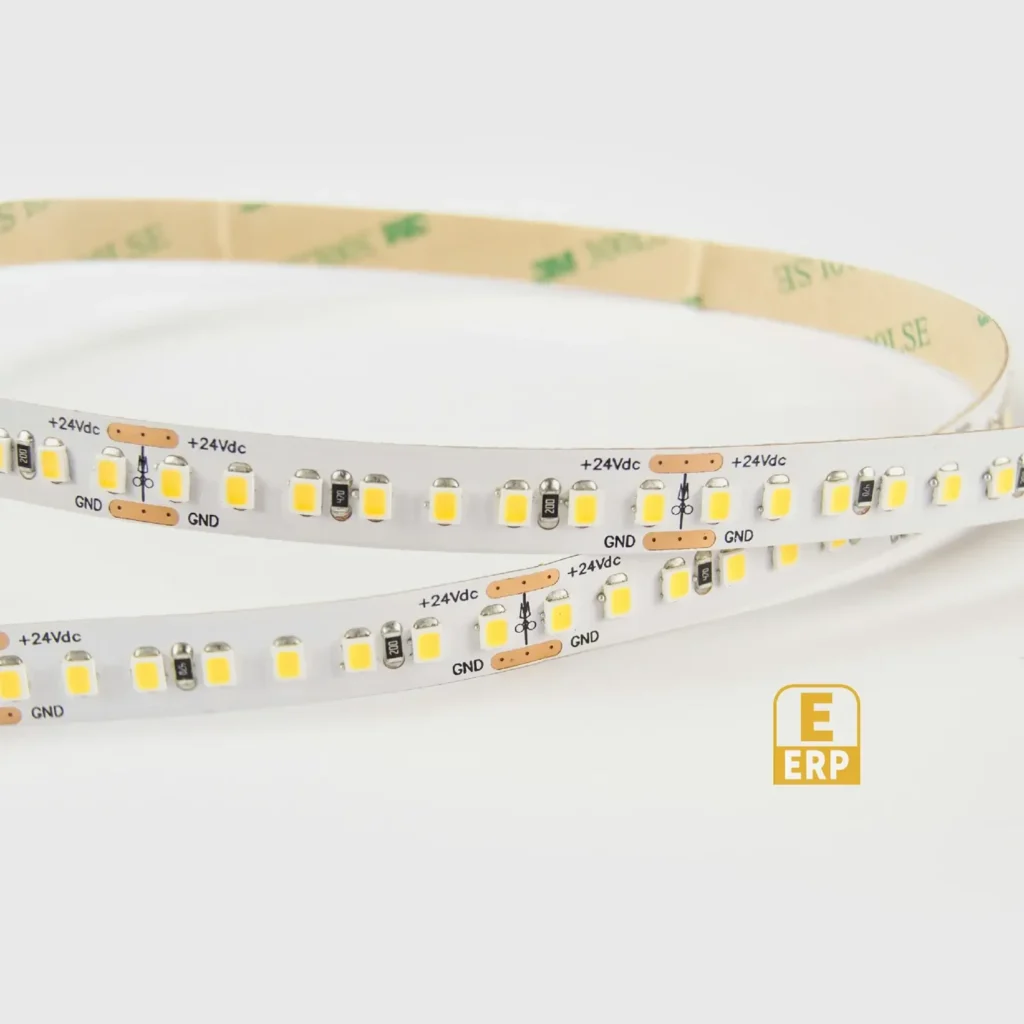
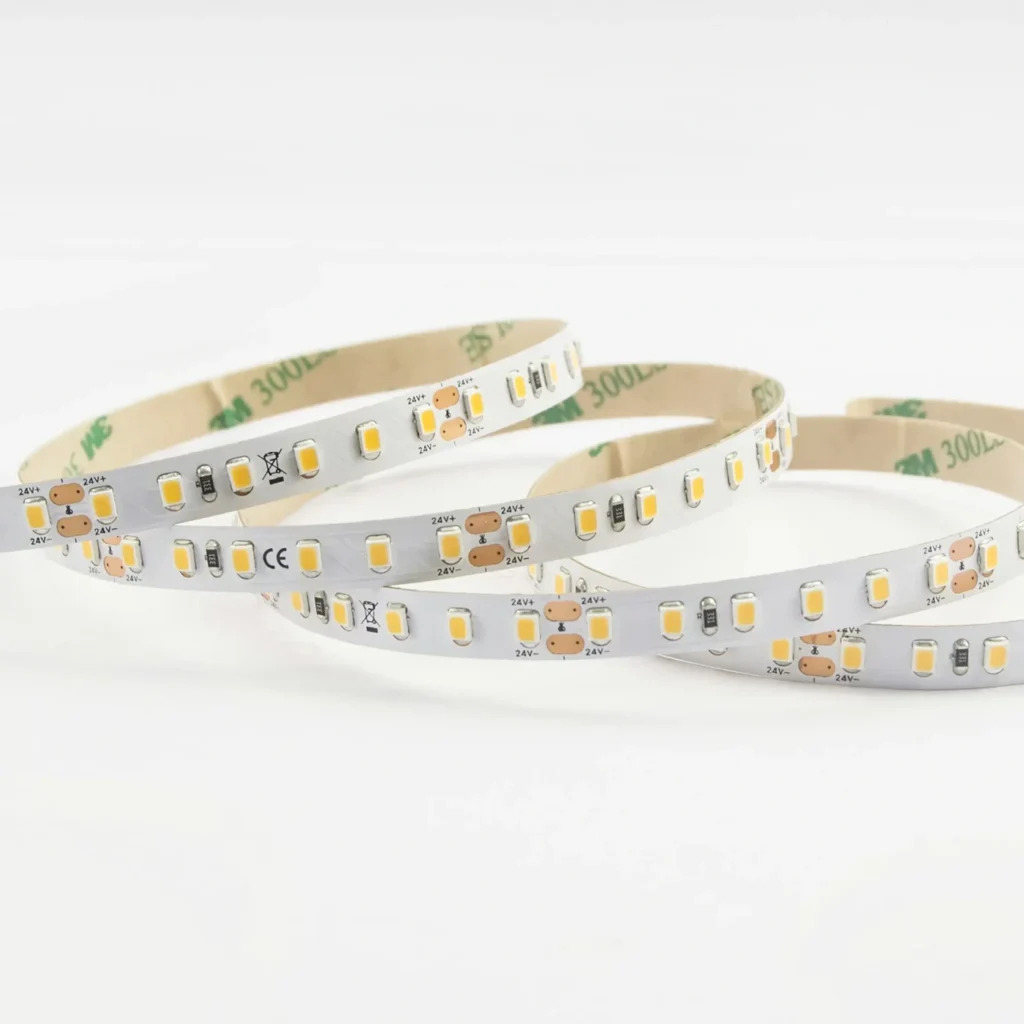
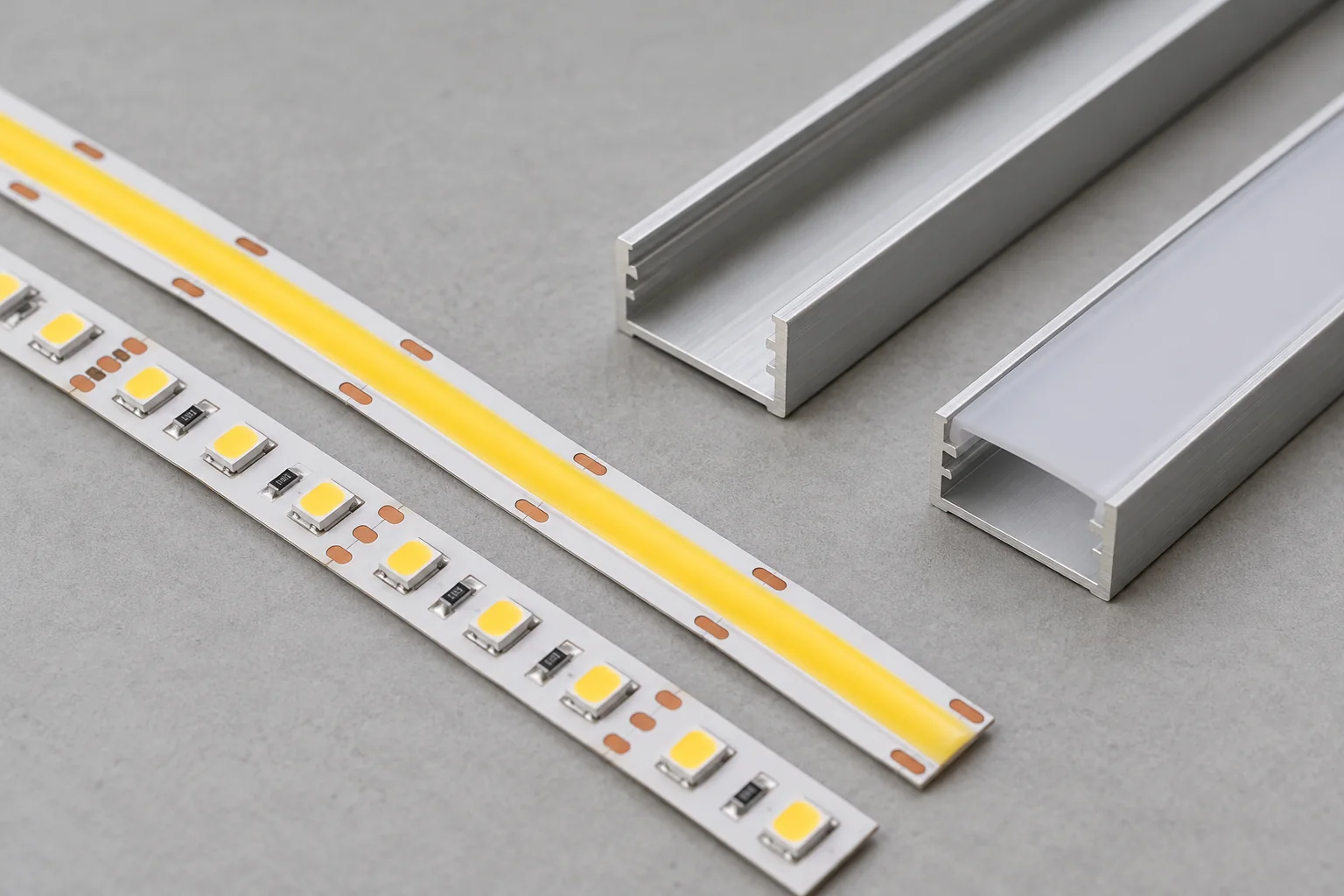
COB and SMD describe different product construction approaches, but the family label is not a complete lighting specification. A continuous-looking line depends on the emitter arrangement, profile, diffuser, viewing distance and mounting detail. Test the proposed assembly where people will actually see it.
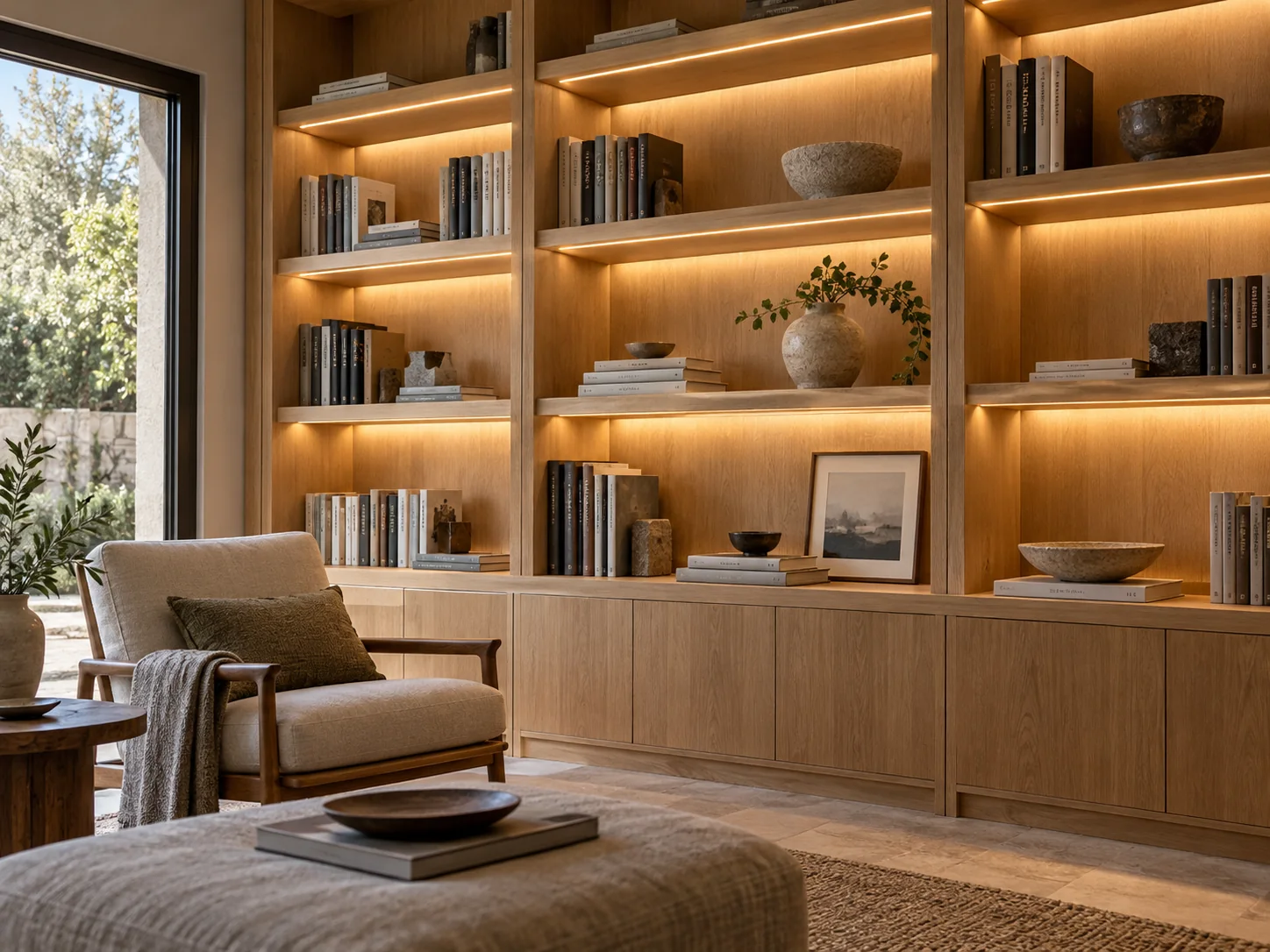
For a short shelf with a visible diffuser, compare both candidates at the intended viewing distance. For a hidden line reflected on glossy stone, inspect the reflection as well as the direct view. These are different evaluation conditions even when the same strip is used.
Compare the same requirements
Use the same CCT, confirmed luminous output and installation conditions when comparing candidates. LED count alone does not specify brightness, efficacy or the appearance through a diffuser. Ask for the relevant product-specific report rather than comparing unrelated headline numbers.
Build a comparison sheet with one column per exact SKU. Record which values are listed, which have supporting reports and which remain unanswered. A missing power or output value should stay unresolved rather than being estimated from LED density.
Concept diagram only. Not to scale; connections, supply and feed limits require the exact component instructions.
Check whether it fits the cabinet
PCB width is one dimension. The usable recess, profile, cover, connector and cable exit determine the full installed fit. Plan the marked cutting interval against each individual section, leaving space for end details.
Plan each furniture section separately. A slim PCB may still need a wider profile or connector; the quoted strip length may also differ from the usable illuminated length because of cutting units and end details.
Approve the system and sample
Match voltage, driver, controls and power-feed requirements. Inspect the sample on the actual finish, especially glossy worktops and glass. Keep the approved SKU and assembly detail with the project record.
Keep the approved strip, profile, cover, CCT and mounting position together as a configuration. Changing the diffuser or furniture finish later can change the appearance even if the strip SKU remains the same.
A PRACTICAL COMPARISON
Compare the decisions side by side.
| Compare | Record for each candidate | Decision check |
|---|---|---|
| Visible line | Profile, diffuser, view and mounting position | Inspect the assembled sample. |
| Light quality | Selected CCT and colour-rendering requirements | Evaluate on the actual materials. |
| Electrical data | Confirmed W/m, lm/m and operating conditions | Compare under consistent conditions. |
| Physical fit | PCB, cutting unit, connectors and end space | Check the complete furniture section. |
PLANNING EXAMPLE
A comparison brief for one shelf module.
Planning example: compare two candidates in the same shelf recess with the same diffuser and selected white appearance. Record the visible line, reflected light, fitting dimensions and confirmed electrical data. The example is a review method, not a completed BEXLIGHTING project.
YOUR NEXT STEP
Helpful details for your project.
- Exact SKU and selected CCT for each sample
- Same profile, diffuser and mounting conditions where possible
- Confirmed electrical and light-output data
- Written record of the approved appearance and assembly
Questions about this topic.
Is COB automatically better for cabinet lighting?
No. Compare the required appearance, physical fit, documented performance and complete system. The construction family is one part of that decision.
Can LED count be used as a brightness comparison?
It does not establish luminous output. Use the measured output for the exact SKU under comparable conditions.
Can I replace SMD with COB without checking the assembly?
Review dimensions, cutting units, connections, load, controls and heat-management requirements before accepting a substitution.
Apply the reading to your project.

Kitchen cabinetry
Plan a useful light line below wall cabinets, inside shelves or along a cabinet base. Start with the position of the light, available profile space and the route to the driver.
Explore the solution →Comparison candidates only. Confirm the exact product and complete assembly for the application.
Discuss this application