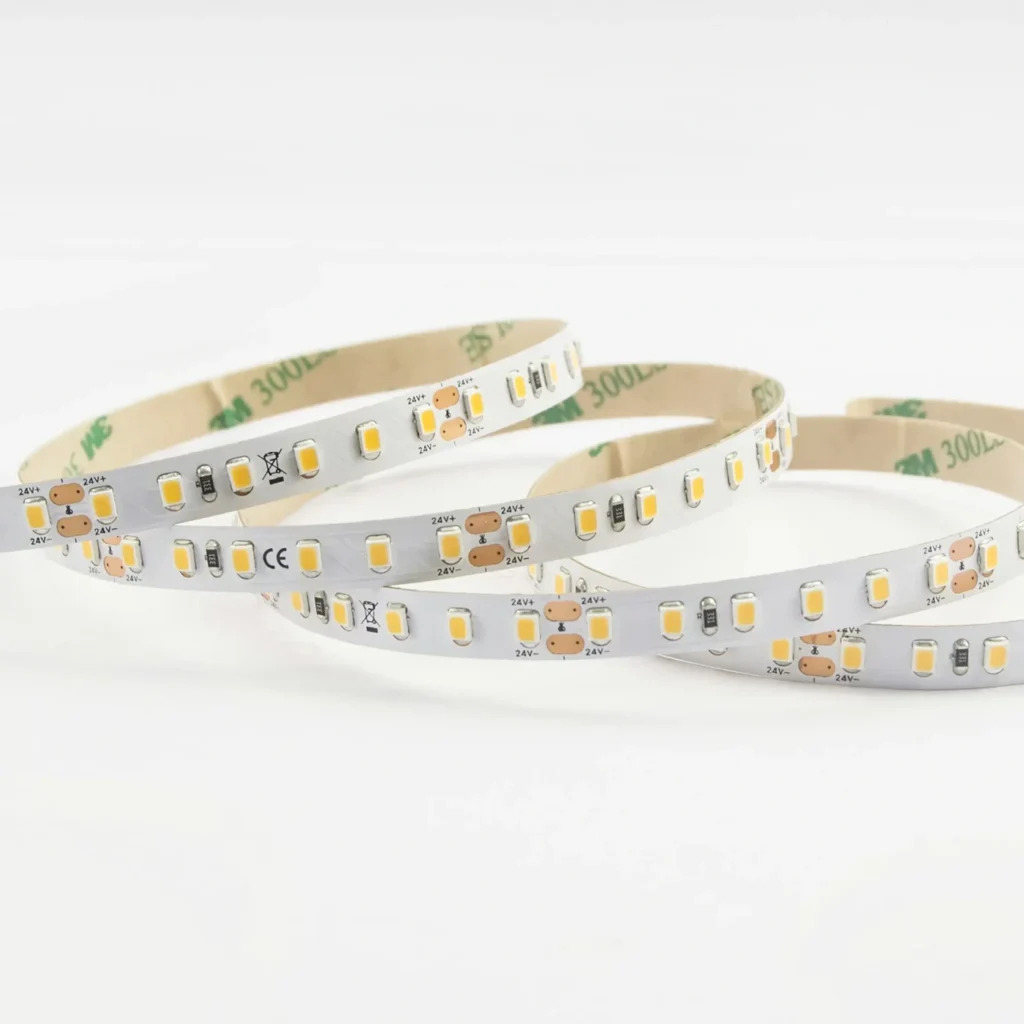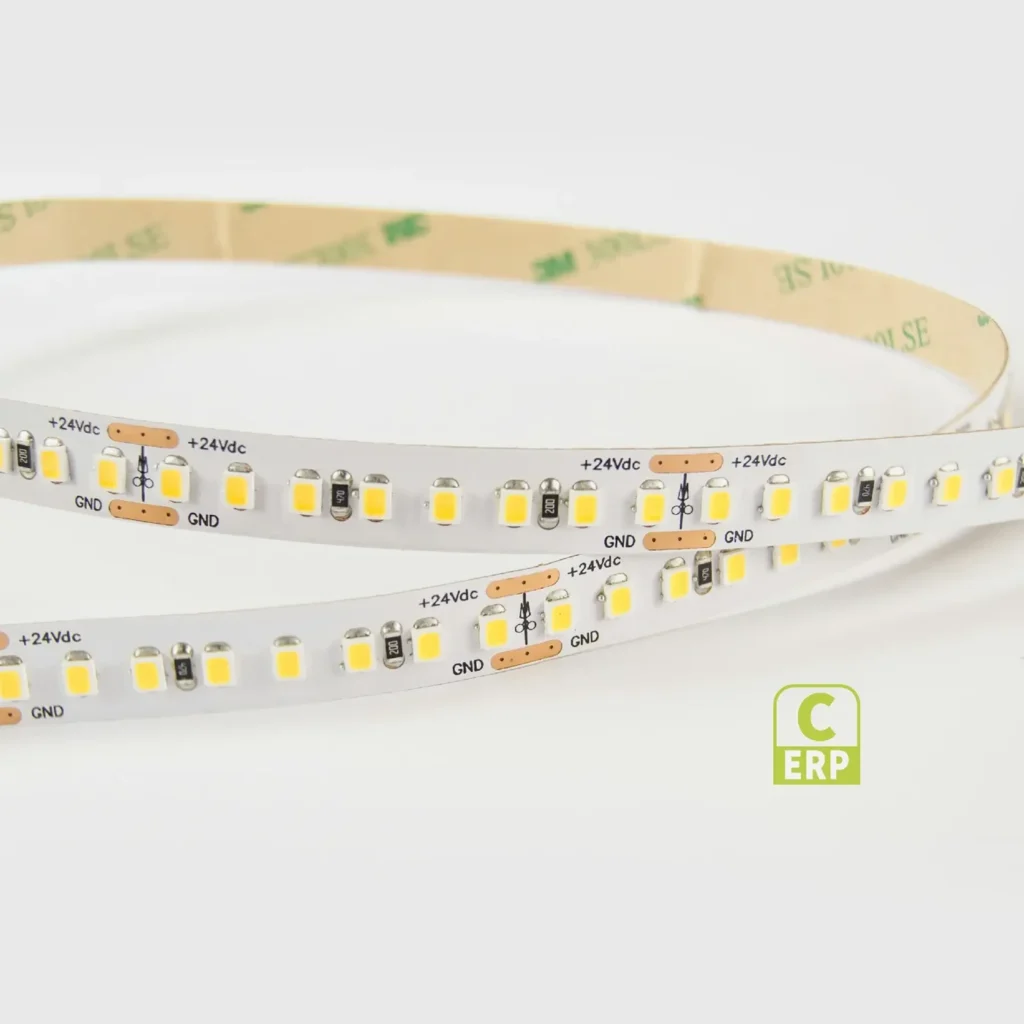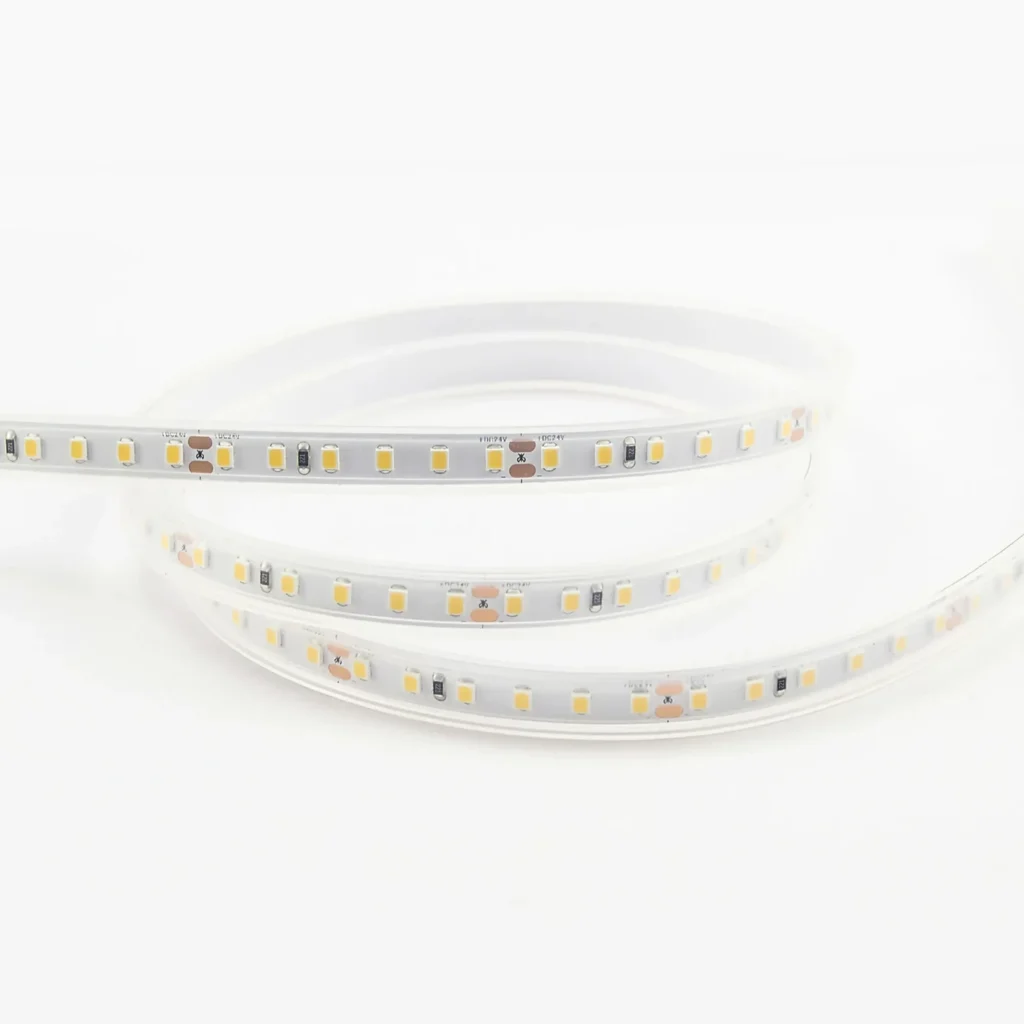

Set up a comparison that answers one question
Use two offered CCT versions of the same strip family if possible. Fit equal illuminated lengths in identical profiles and covers. Put one real cabinet door, worktop offcut or merchandise set in the viewing area. If the samples use different LED constructions or optical covers, list those differences before drawing a conclusion about CCT.
Compare samples sequentially in the same position as well as side by side. The side-by-side view reveals differences; the sequential view helps judge whether each fits the complete scene. Avoid looking directly into exposed LEDs before evaluating the material.
Match the conditions, not just the dimmer numbers
The same dimmer percentage does not guarantee equal output from different configurations. If practical, compare similar measured light levels at the same point on the surface. Record the instrument, position and readings if they form part of the acceptance evidence. A visual purchasing comparison should not be presented as a laboratory test.
| Keep fixed | Record separately |
|---|---|
| Profile, diffuser and strip position | Model and nominal CCT |
| Finish sample and viewing position | Output differences and control setting |
| Room-lighting scene | Warm/cool preference and green/pink tint |
| Illuminated length | Glare, visible dots and reflected lines |
Separate the observations
“Too yellow” may describe the intended warm/cool difference. “Greenish” calls for a tint or chromaticity discussion. “Dim” calls for an output or distribution check. “Patchy” may concern the optics or feed arrangement. Record the observation before selecting the remedy.
Photograph the setup, labels and component references. Locking exposure and white balance can improve repeatability in documentation, but it does not turn a camera and an unknown screen into a calibrated colour standard. Do not create two supposedly measured CCT pictures by applying different colour filters to one photograph.
What to retain
Keep the chosen assembly with its sample ID, exact component list, finish reference and acceptance scene. For a repeat order, compare against that assembly rather than a compressed phone image. State whether visual review, measured tolerances or both govern acceptance.