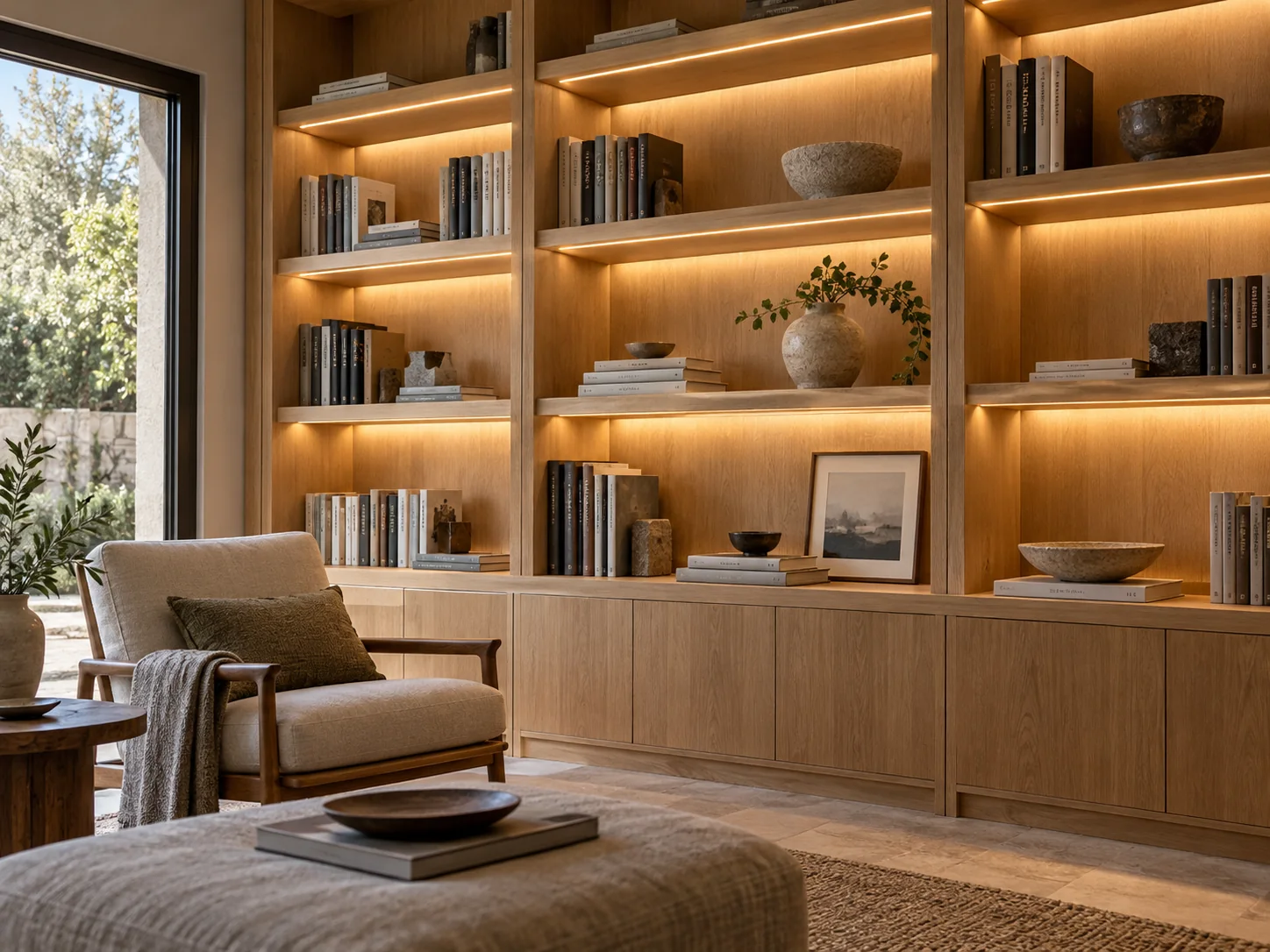
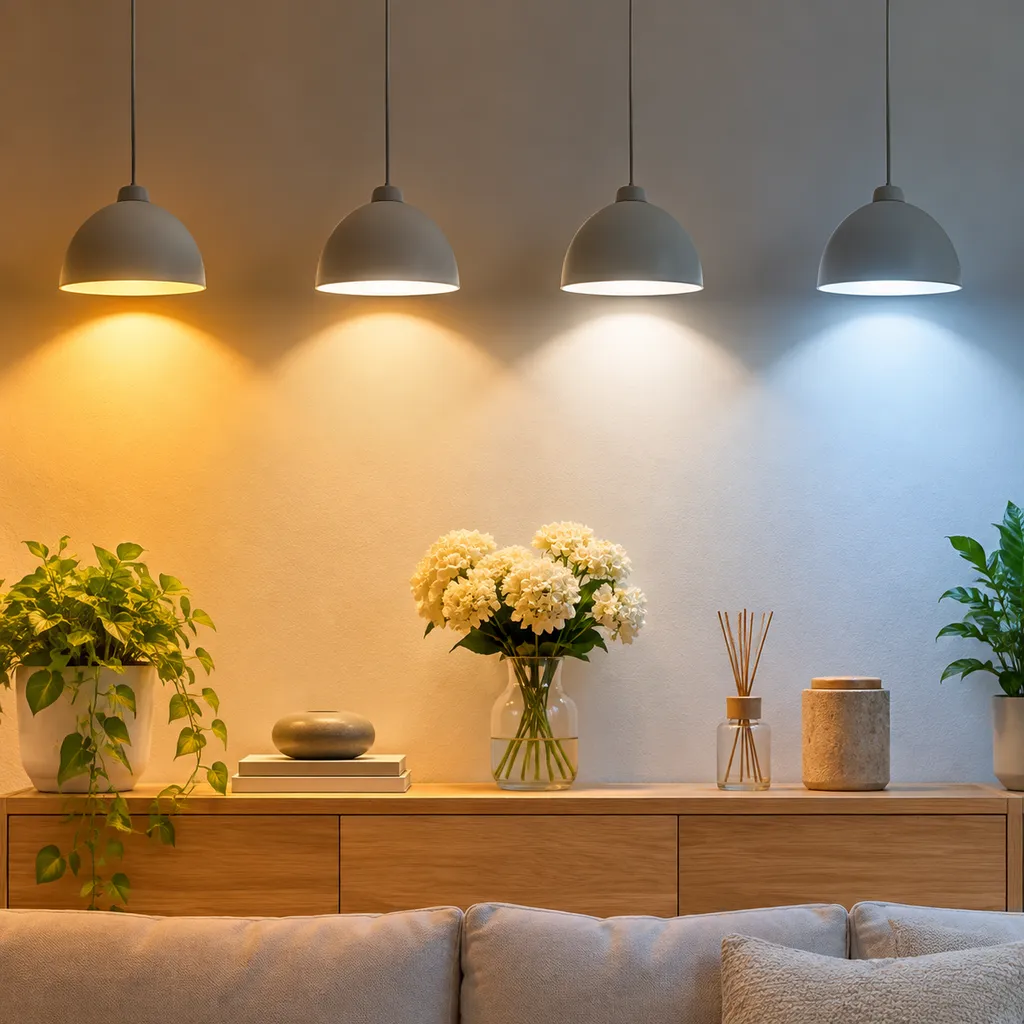
Quick Comparison Matrix: 2700K vs. 3000K vs. 4000K vs. 5000K
Choosing the right LED color temperature affects how cabinets, worktops, furniture, and display products appear. Kelvin describes the visual warmth or coolness of the light—not its brightness. A higher Kelvin rating does not automatically produce more lumens.
| Colour temperature | Light appearance | Atmosphere | Best-fit applications | Suitable materials and finishes |
|---|---|---|---|---|
| 2700K | Extra-warm white with a soft, golden tone | Cozy and relaxed | Bedrooms, wardrobes, living room shelving, dining areas, hospitality furniture | Walnut, warm oak, brass, natural timber, warm fabrics, cream finishes |
| 3000K | Clean warm white with less yellow than 2700K | Inviting and comfortable | Kitchen under-cabinet lighting, pantry shelving, bathroom vanities, residential cabinetry | Painted cabinets, butcher block, warm stone, timber, transitional interiors |
| 4000K | Crisp neutral white with balanced tones | Focused and contemporary | Modern kitchens, worktops, office millwork, architectural coves, retail cabinets | White quartz, marble, gray lacquer, navy finishes, stainless steel |
| 5000K | Cool daylight white with higher visual contrast | Precise and technical | Retail merchandise, jewelry counters, workshops, inspection areas, daylight-filled showrooms | Glass, chrome, cool-toned products, white surfaces, technical displays |
Material Pairing at a Glance
- Warm timber and brass: 2700K enhances richness and creates a softer appearance.
- Mixed residential finishes: 3000K provides warmth while maintaining clearer everyday visibility.
- White, gray, and polished surfaces: 4000K supports a clean, neutral presentation without a strong yellow cast.
- Glass, chrome, and high-contrast products: 5000K gives a sharper daylight effect, but may appear too sterile in relaxed residential spaces.
The most suitable 2700K vs. 3000K vs. 4000K vs. 5000K choice depends on the surrounding lighting, surface materials, room function, and desired visual effect. Always assess the LED strip in the intended cabinet, profile, and diffuser before confirming production lengths.
2700K Extra-Warm White: Ambient Warmth and Relaxation
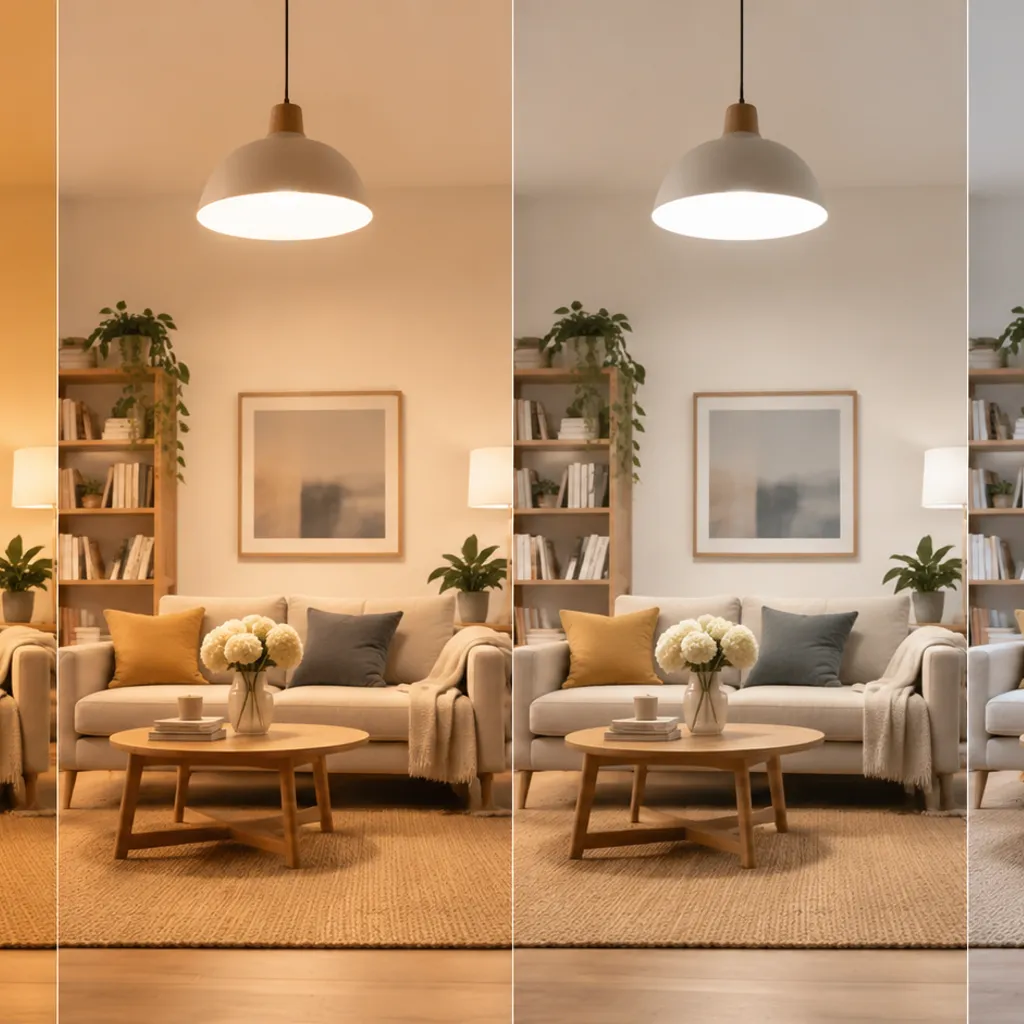
2700K LED strip lighting produces an extra-warm white that feels close to traditional incandescent and halogen lamps. It gives a soft amber tone, making spaces feel calm and comfortable rather than bright or clinical. The lower Kelvin value changes the color appearance, not the light output; brightness still depends on lumens, strip design, and controls.
Best Applications for 2700K Lighting
I use 2700K for areas where atmosphere matters more than sharp task visibility:
- Bedrooms and bedside wardrobes
- Living room shelving and display units
- Dining areas and sideboards
- Hospitality furniture, including hotel headboards
- Warm timber cabinetry and decorative joinery
This color temperature works especially well with walnut, oak, brass, leather, warm textiles, and cream or beige finishes. It brings out the depth of wood grain and gives metallic accents a softer, warmer appearance.
When 2700K May Look Too Yellow
The same warmth can be unsuitable for food-preparation zones, modern white kitchens, or displays with cool gray, blue, chrome, and stainless-steel finishes. In these settings, 2700K may make white surfaces appear yellow and reduce the clean, crisp appearance of products or worktops.
For a closer comparison of warm cabinet lighting, see this guide to 2700K vs. 3000K cabinet lighting. A physical sample tested inside the intended profile and diffuser remains the most reliable way to confirm how the strip will look with the actual materials.
3000K Warm White: Versatile Residential and Joinery Lighting
A 3000K warm-white LED strip gives a cleaner, slightly less yellow appearance than 2700K. It still feels comfortable and inviting, but provides clearer visibility for everyday tasks. This makes 3000K a practical middle ground between relaxed ambient lighting and brighter-looking neutral white.
Best Uses for 3000K LED Strip Lighting
3000K works well for:
- Kitchen under-cabinet lighting and countertop illumination
- Pantry and open shelving
- Bathroom vanities
- Living room cabinetry and display shelves
- Furniture, joinery, and transitional interiors
It pairs naturally with painted cabinet doors, butcher-block worktops, warm stone, timber details, and soft neutral finishes. In kitchens, it can make food preparation areas feel bright enough without creating the cooler appearance associated with 4000K lighting.
2700K vs. 3000K
Choose 2700K when the priority is a softer, more relaxed atmosphere for wardrobes, shelving, bedrooms, or hospitality furniture. Choose 3000K when you need warmer light with better everyday clarity for kitchens, bathrooms, and practical cabinet lighting.
For a closer kitchen comparison, see our guide to 3000K vs. 4000K under-cabinet lighting. The final appearance still depends on the LED strip, cabinet materials, profile, diffuser, and surrounding light, so testing a physical sample in the finished setting remains the safest way to approve the color.
4000K Neutral White: Crisp Task Clarity and Modern Design
A 4000K LED strip produces neutral white light with little yellow or blue cast. It gives work surfaces and cabinet interiors a clean, balanced appearance without the warmer feel of 2700K or 3000K lighting. Like other Kelvin ratings, 4000K describes light color—not brightness.
Best Applications for 4000K LED Lighting
4000K works well where clear visibility and a modern look matter, including:
- Contemporary kitchen cabinets and countertops
- Worktops, pantries, and utility areas
- Office millwork and architectural coves
- Retail display cabinets and shelving
- Commercial joinery and hospitality interiors
It pairs especially well with white quartz, marble, gray lacquer, navy cabinetry, glass, and stainless steel. Neutral white light can keep these finishes looking clean and defined, while also supporting clearer viewing of products and surface details.
3000K vs. 4000K
Choose 3000K when you want warm continuity with timber, painted cabinetry, and residential interiors. Choose 4000K when sharper task visibility and a more neutral appearance are the priority.
For a detailed comparison of display applications, our guide to 4000K vs. 5000K display lighting explains how neutral and cooler white light interact with merchandise, finishes, and surrounding illumination. Always test the LED strip inside the intended cabinet, profile, and diffuser before approving full project lengths.
5000K Cool Daylight White: High-Contrast Visibility
A 5000K daylight-white LED has a cool, clear appearance similar to bright midday daylight. It gives spaces a crisp visual character and can make details easier to distinguish, but it does not automatically produce more brightness than a 2700K, 3000K, or 4000K LED strip.
| Application | Why 5000K can work well |
|---|---|
| Retail merchandise displays | Creates a clean, high-contrast presentation |
| Jewelry and watch counters | Works well with glass, chrome, and polished metal |
| Garages and workshops | Supports clear visibility for detailed tasks |
| Inspection stations | Helps reveal surface details and finish variations |
| Daylight-filled showrooms | Blends more naturally with strong daylight |
| Technical displays | Complements cool-toned products and modern materials |
5000K lighting pairs effectively with glass, chrome, stainless steel, white surfaces, and cool-colored products. It can also suit retail cabinets where product clarity matters more than a soft atmosphere.
However, 5000K may feel sterile or overly clinical in bedrooms, living rooms, dining areas, and hospitality furniture. It can make warm timber, brass, soft fabrics, and warm-toned finishes appear less comfortable. For visible cabinetry, test the LED strip with the actual profile and diffuser, since the surrounding materials can change the perceived color.
How Kelvin Relates to Brightness, Energy Use, and Color Accuracy
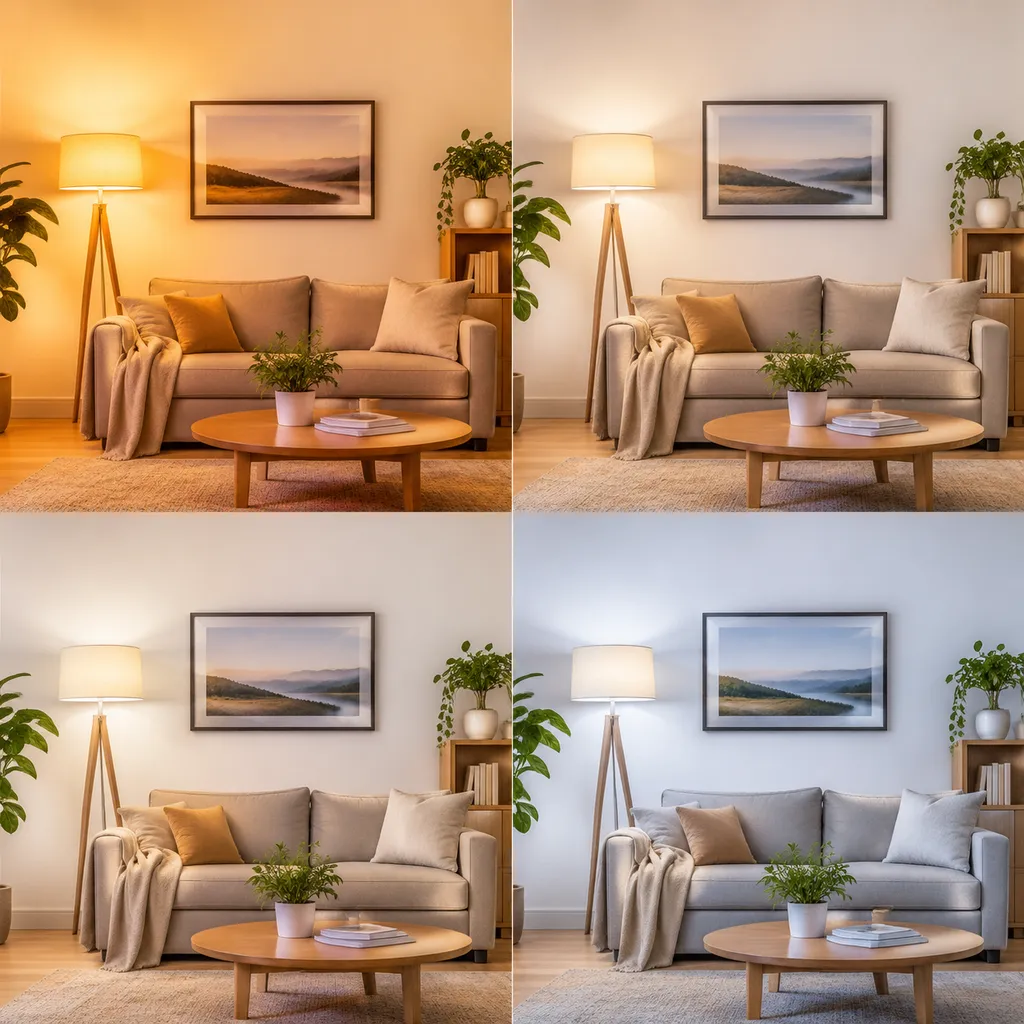
Kelvin measures color appearance, not light output. In LED lighting, Kelvin describes the correlated color temperature (CCT): a lower value looks warmer and more yellow, while a higher value looks cooler and more blue. A clear explanation of CCT in LED lighting helps separate color choice from performance specifications.
| Specification | What it measures | What it affects |
|---|---|---|
| Kelvin (K) | White-light color appearance | Warm, neutral, or cool visual effect |
| Lumens (lm) | Amount of visible light | Perceived light output |
| Watts (W) | Electrical power used | Energy consumption |
| CRI | How accurately colors appear | Appearance of wood, food, fabrics, and products |
A higher Kelvin rating does not automatically mean brighter light. A 5000K LED strip can produce fewer lumens than a 3000K strip if the two models use different LED densities, power levels, or optical designs. Brightness should be assessed through lumens, installation distance, diffuser type, and the intended task—not Kelvin alone.
Likewise, 5000K is not inherently more energy-intensive than 3000K. If both LED strips have comparable power consumption and specifications, their energy use can be similar even though their color appearance is different. For accurate material and product colors, also check the CRI, with CRI 90 or higher generally preferred for cabinets, food preparation areas, furniture, and retail displays.
Four Factors to Check Before Choosing LED Color Temperature
Choosing an LED strip colour temperature is not only about whether the light looks warm or cool. I always check the room, materials, and complete lighting assembly before approving a 2700K, 3000K, 4000K, or 5000K LED strip.
1. Match the Surrounding Light
Compare the cabinet lighting with ceiling downlights, pendants, wall lights, and natural daylight. A warm cabinet strip beside cool white ceiling lighting can create an uneven appearance. For open-plan kitchens, retail interiors, and hospitality projects, keeping nearby light sources within a similar CCT range usually gives a more consistent result.
2. Check Materials and Finishes
Light colour changes how surfaces appear:
- Timber: 2700K and 3000K usually enhance walnut, oak, and other warm wood tones.
- Painted cabinetry: 3000K or 4000K can help white and neutral finishes look cleaner.
- Stone and quartz: 4000K may suit cool gray or white surfaces, while 3000K can complement beige and warm stone.
- Glass and metal: Neutral or cooler light can increase definition, but may look harsh on highly reflective finishes.
- High-gloss surfaces: Always test for glare and unwanted colour reflections.
3. Check CRI
Kelvin describes the appearance of white light, not colour accuracy. CRI, or Color Rendering Index, indicates how naturally the light shows colours. For food, fabrics, timber, painted doors, and retail products, I recommend checking for CRI 90 or higher when accurate colour appearance matters.
4. Test the Profile, Diffuser, and Room
An aluminium profile, frosted diffuser, or opal cover can slightly change the perceived colour and brightness of an LED strip. Test the complete assembly rather than the bare strip. Viewing distance, cabinet depth, room function, time of day, and existing ambient light can also affect the result.
For a practical specification checklist, use this LED colour temperature sample comparison guide before approving production lengths. A physical sample tested inside the actual cabinet or display remains the most reliable way to verify the final appearance.
Fixed CCT vs. Tunable White LED Strips
A fixed CCT LED strip is usually the right choice for a single-purpose space. Select one Kelvin rating that suits the room and keep the appearance consistent across kitchen cabinets, wardrobes, shelving, or architectural coves. This approach simplifies installation, controls, and future replacement.
Tunable white LED strips are more useful when one space needs different lighting moods. Kitchens, hospitality suites, and showrooms may benefit from cooler white light for daytime tasks and warmer light for evening use or display presentation. A tunable white range from approximately 2700K to 6500K can provide this flexibility, but the final effect depends on the strip, diffuser, surrounding light, and control system.
For reliable operation, match the strip with compatible dimming controls and tunable white controllers. Check the required voltage, connection method, control protocol, and driver capacity before ordering. For example, 2835 tunable white LED strips are designed for applications where colour temperature needs to change within the same installation. Use fixed CCT when consistency matters most; choose tunable white when the space must support both focused task lighting and warmer ambient light.
How to Test and Verify the Right Color Temperature Before Ordering
Choosing an LED strip by Kelvin rating alone can lead to unexpected results. I recommend checking the strip, cabinet dimensions, profile, diffuser and surrounding lighting together before approving production lengths.
LED Strip Selection Checklist
| Check | What to verify | Practical reason |
|---|---|---|
| Light appearance | Use a continuous, dot-free COB LED strip for visible cabinetry, reflective surfaces and closely viewed joinery. | Creates a smoother light line with fewer visible LED points. |
| LED type | Use high-density SMD 2835 or 2216 strips for task lighting, shelving and architectural coves. | Provides a practical option for applications requiring clear, even illumination. |
| PCB width | Confirm whether the installation requires an 8 mm or 10 mm PCB. | Ensures the strip fits the aluminium profile, channel or narrow furniture detail. |
| Operating voltage | Confirm 12V DC or 24V DC. | The LED strip, power supply and control equipment must use compatible specifications. |
| Cutting interval | Match the strip’s cutting marks with cabinet sections, shelves and joinery lengths. | Helps reduce waste and supports accurate wiring and installation. |
For a closer comparison of visible light lines and LED construction, see this guide to COB and SMD cabinet lighting.
Test a Physical Sample
Install the sample inside the actual cabinet or furniture detail. Test it with the intended aluminium profile, diffuser and power supply, then view it under the room’s existing ceiling lights and natural daylight.
Check:
- Whether the colour temperature matches nearby lighting
- How wood, paint, stone, glass and metal surfaces appear
- Whether the diffuser changes the perceived warmth
- Whether the light line is smooth at the normal viewing distance
- Whether the sample fits the available space and cutting points
Compare the sample at different times of day before confirming full production lengths. This simple verification step helps prevent an incorrect LED strip colour, unsuitable profile fit or unexpected result across a larger project.
Frequently Asked Questions About 2700K, 3000K, 4000K, and 5000K
Does 5000K use more electricity or produce more lumens than 3000K?
No. Kelvin measures color appearance, not brightness or energy use. Lumens indicate light output, while watts indicate power consumption. A 5000K LED strip is not automatically brighter or less efficient than a comparable 3000K strip.
Can different color temperatures be mixed in one open-concept room?
Yes, but the transition should look intentional. A consistent color temperature usually works best across connected kitchen cabinets, shelving, and furniture. If mixing 2700K, 3000K, and 4000K, keep each temperature assigned to a clear area or function.
Which color temperature is best for kitchen under-cabinet lighting?
- 2700K: Relaxed and warm, but may look too yellow near food-preparation areas.
- 3000K: A practical choice for residential kitchens and warm finishes.
- 4000K: Clearer for worktops, modern cabinetry, and task-focused lighting.
The best option depends on the surrounding ceiling lights, countertop, cabinet finish, and personal preference.
Is 3000K or 4000K better for modern kitchens?
3000K keeps the space warm and welcoming, especially with timber, warm stone, or painted cabinetry. 4000K gives a crisper appearance and often suits white quartz, gray finishes, stainless steel, and contemporary kitchens. Neither is universally better.
Why can the same 3000K LED strip look different between brands?
The stated CCT is only one part of the result. Differences in LED binning, color consistency, CRI, PCB quality, diffuser material, and production tolerances can change the visible appearance. Always compare samples under the intended profile and diffuser.
How do binning, CRI, PCB quality, and diffusers affect color consistency?
- LED binning: Tighter bins help maintain a closer color match between production batches.
- CRI: A higher CRI can show wood, food, fabrics, and merchandise more naturally.
- PCB quality: Consistent construction supports more even light performance along the strip.
- Diffusers: Frosted or opal covers can soften light and slightly change its perceived color.
Should residential lighting use 2700K, 3000K, or 4000K?
- Choose 2700K for bedrooms, dining areas, living room shelving, and hospitality-style warmth.
- Choose 3000K for general residential cabinetry, kitchen lighting, and transitional interiors.
- Choose 4000K for modern kitchens, home offices, utility areas, and sharper task visibility.
Is 5000K suitable for retail displays and workshops?
It can be. 5000K daylight white suits merchandise displays, technical areas, workshops, inspection stations, and spaces with strong natural daylight. It may feel too stark in bedrooms, lounges, and dining areas.
What color temperature works best with wood cabinets?
2700K and 3000K generally complement walnut, oak, brass, and other warm finishes. Use 4000K when the design includes gray, white, or cool-toned surfaces and a cleaner contrast is required. Test the wood sample because stain, grain, and diffuser choice can change the result.
How can a lighting sample prevent an incorrect color-temperature order?
Test the actual LED strip inside the intended cabinet, aluminum profile, diffuser, and room. Compare it with nearby lighting at the relevant time of day, then check the strip length, PCB width, voltage, and cutting interval. A physical sample can reveal color shifts and material interactions that a specification sheet cannot. For installation planning, use this LED color temperature guide alongside an in-situ sample review.