THE KEY DECISIONS
The essentials at a glance.
- CCT describes white-light appearance; CRI answers a different question.
- Review the proposed light on the actual material or merchandise.
- Specify adjustable white as a complete strip and control system.
How are CCT and CRI different?
Correlated colour temperature is expressed in kelvin and describes the apparent warmth or coolness of white light. Colour rendering index describes colour rendition relative to a reference source. They answer different questions: a warm-white strip can have different colour rendering performance from another warm-white strip.
Which CCT should you specify?
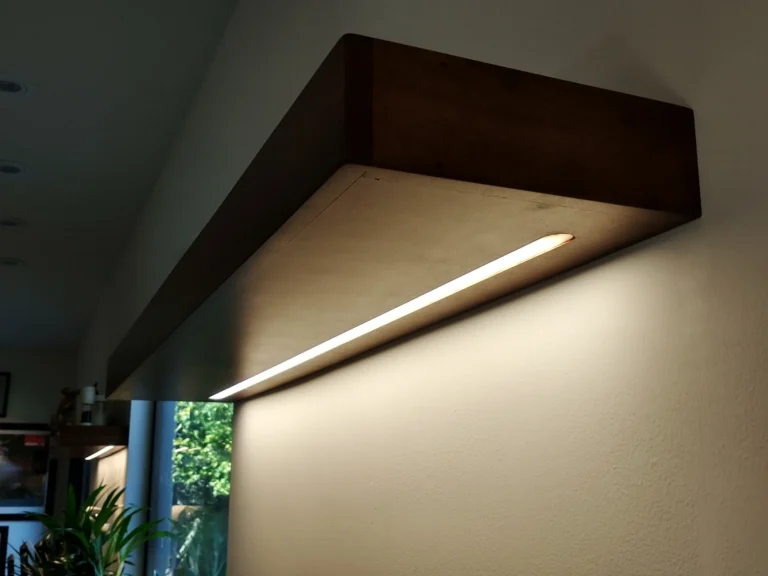
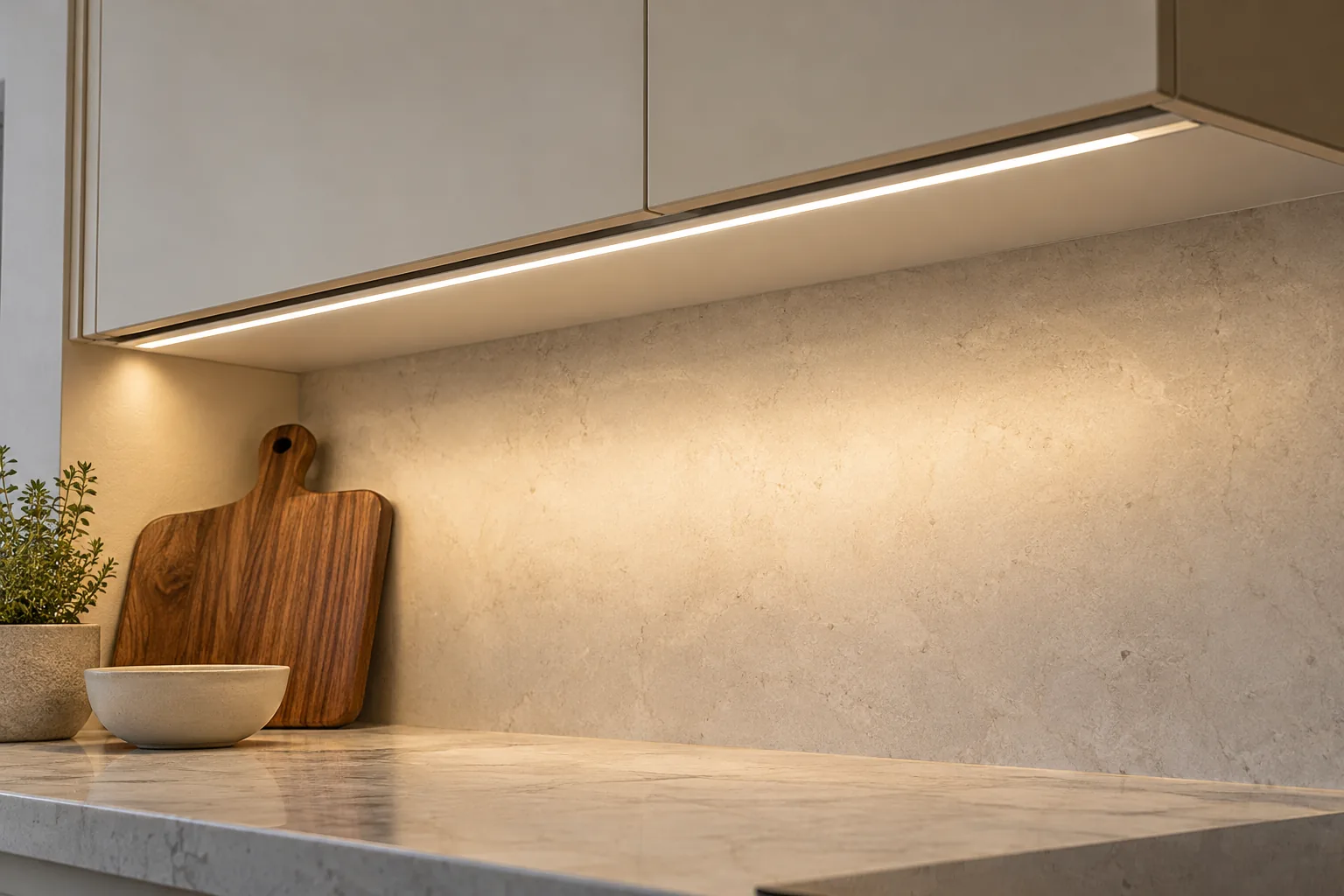
Start with the design intent and nearby light sources. Lower CCT values generally look warmer; higher values look cooler. Compare the proposed light on the actual stone, timber, paint, fabric or merchandise where practical. A screen image is influenced by camera exposure, white balance and display settings and cannot replace an illuminated sample.
What does CRI 90 tell you?
CRI Ra is an average metric and does not describe every colour or all aspects of light quality. Compare the CRI options listed for the exact SKU; the available choices can differ between models. For applications where colour discrimination matters, request a product-specific report and discuss additional metrics, such as saturated red rendering, rather than treating the label as a complete photometric assessment.
Fixed white or tunable white?
Fixed-white products provide a specified white-light option. Tunable-white products allow adjustment within their specified range when used with compatible controls. Decide whether adjustable colour is needed before choosing the driver and controller. The exact adjustment range, channel layout and output behaviour must come from the product documentation.
How should samples and repeat orders be reviewed?
Define the selected CCT and acceptable colour consistency in the approved specification. Inspect a sample under the intended conditions. For repeat purchases, retain the approved SKU and written requirements and ask how the supply batch will be identified. Do not assume that products sharing a nominal CCT are visually identical.
A PRACTICAL REFERENCE
Keep the key product details together.
| Selection question | What to record | How to review |
|---|---|---|
| White-light appearance | Required fixed CCT or adjustable range | Sample with surrounding finishes and light |
| Colour rendition | Required metrics and exact variant | Product-specific test information |
| Adjustment | Channel wiring and control behaviour | Compatible driver and controller documents |
| Repeat orders | Approved SKU and sample reference | Retained specification and batch identification |
Take the next step.
- State fixed or tunable white and the required setting or range.
- List nearby light sources and the materials to illuminate.
- Define sample appearance and technical requirements.
- Record the exact approved configuration for repeat orders.
Questions and answers
Is 6500K brighter than 2700K?
CCT does not by itself specify luminous output. Compare the measured lumens and test conditions for the individual variants.
Can I change the CCT of a fixed-white strip with a controller?
Choose a product designed for the required colour adjustment. A normal fixed-white strip does not become tunable white by adding a controller.
Should I choose a strip using a photograph?
Use photographs to understand the application, then confirm light quality with specifications and an approved sample.
Talk to BEXLIGHTING about your project.
Return to the resource library →
Explore the current product catalogue →
Review exact product requirements before preparing an inquiry.